

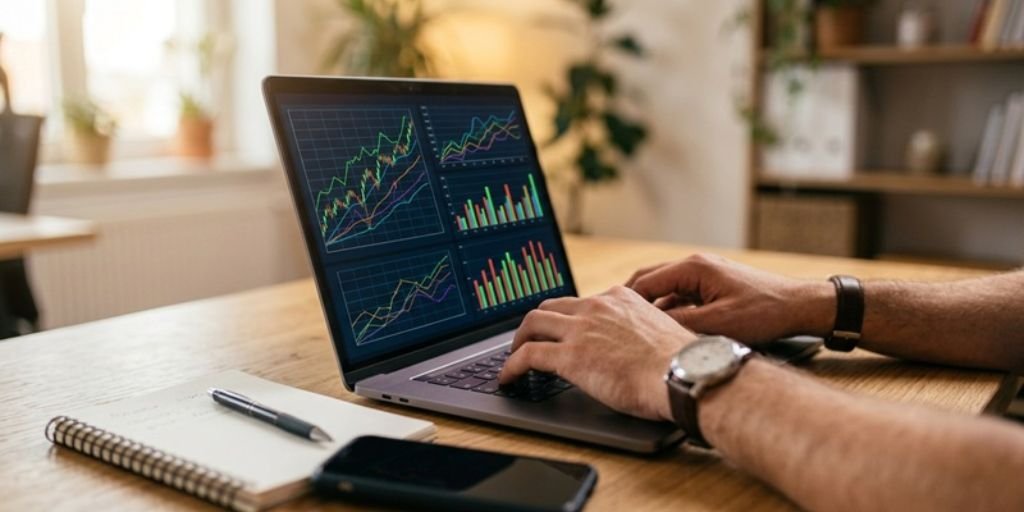
Managing money and making sensible trading decisions can be challenging, especially when markets move quickly. Whether you are new to trading or already have some experience, good management habits can help you stay organized, control unnecessary risks, and make decisions with a clearer mind.
When people search for management tips ftasiatrading, they are often looking for practical ways to approach trading, organize capital, control emotions, and build consistent habits. Trading is not simply about finding an asset that might rise in price. It is also about knowing how much to risk, when to step away, and how to learn from previous decisions.
Think of trading like driving a car on a busy road. Knowing how to accelerate is useful, but knowing when to slow down, stop, and maintain control is just as important. The same principle applies to financial markets.
This guide explores practical management ideas that can help ordinary traders develop a more disciplined approach.
1. Start With a Clear Trading Plan
A trading plan gives you a framework before you put money at risk. Without one, it is easy to make decisions based on excitement, fear, or a sudden market movement.
Define your purpose
Ask yourself why you are trading. Are you learning about financial markets? Building a long-term investment approach? Exploring short-term opportunities? Your answer can influence the type of strategy and risk level that makes sense for you.
Set specific rules
A basic plan can include:
- What markets you will follow
- How much capital you will use
- What conditions must exist before entering a trade
- Where you would exit if the trade moves against you
- When you will take profits
- How many trades you are comfortable making
- When you will stop trading for the day
Writing these rules down can make them easier to follow.
Avoid changing the plan impulsively
A plan should not be treated as something permanent. You can improve it as you gain experience. However, changing your rules during an emotional moment can create unnecessary problems.
2. Understand Risk Before Thinking About Profit
Profit naturally attracts attention, but risk management is one of the most important parts of trading.
A trader can make several successful trades and still experience serious losses if one poorly controlled position becomes too large.
Think in percentages
Instead of focusing only on a currency amount, consider how much of your available trading capital is exposed to a particular idea.
For example, someone with $5,000 should think differently about risk than someone with $50,000. The same position size does not necessarily create the same financial impact for both people.
Never assume a trade is guaranteed
Markets can behave unexpectedly because of economic announcements, company news, geopolitical developments, liquidity changes, or sudden shifts in sentiment.
Even an attractive setup can fail.
Protect your available capital
The purpose of risk management is not to eliminate every loss. That is impossible. The goal is to prevent individual mistakes from causing damage that is difficult to recover from.
3. Keep Position Size Under Control
Position sizing is closely connected with risk management. It determines how much capital you place behind a particular trading idea.
One common mistake is becoming more confident after a few successful trades and increasing position sizes dramatically.
Imagine filling a bucket with water. Adding a small amount at a time gives you control. Pouring an entire container into it at once can create a mess. Trading capital works in a similar way.
Consider your overall exposure
If you have several positions open at the same time, look at them together. Five apparently different trades may actually depend on similar market conditions.
For example, multiple positions connected to the same economic trend can increase your overall exposure without making it obvious.
Avoid oversized positions
A large position may produce a large gain if everything goes according to plan, but it can also create a large loss when conditions change.
A sustainable approach usually places greater importance on survival and consistency than on one spectacular result.
4. Use Stop-Loss Rules Responsibly
A stop-loss can help define the point at which a trade idea is no longer working as expected.
It is not a magical protection mechanism, and actual execution can differ from the intended price during rapidly moving markets or periods of limited liquidity. Still, having a predetermined exit level can help prevent emotional decisions.
Set the exit before entering
Ask yourself:
“At what point would I accept that my original idea was wrong?”
Answering this before entering can be easier than answering it after a position starts losing money.
Do not move the stop simply because you dislike the loss
One dangerous habit is repeatedly moving an exit level farther away. The trader may tell themselves that the market will eventually recover.
Sometimes it does. Sometimes it does not.
The important issue is that the original risk calculation has changed.
5. Manage Emotions During Market Volatility
Trading is not only a financial activity. It is also a psychological challenge.
Fear can cause people to exit too quickly. Greed can encourage excessive risk. Frustration can lead to revenge trading, where someone tries to recover a loss immediately by taking another position.
Recognize emotional warning signs
You may need to pause when you notice:
- Trading because you are angry
- Increasing position size after a loss
- Entering without checking your plan
- Constantly watching price movements
- Feeling pressure to recover money immediately
- Making repeated trades without a clear reason
Taking a break is not necessarily a missed opportunity. Sometimes it is a form of management.
Create a cooling-off period
After a significant unexpected loss, stepping away from the screen for a while can help you return with a clearer perspective.
6. Keep a Detailed Trading Journal
A trading journal can turn individual experiences into useful information.
You do not need complicated software. A spreadsheet or notebook can be enough.
Record details such as:
- Date and time
- Asset or market
- Entry price
- Exit price
- Position size
- Reason for entering
- Planned risk
- Actual result
- Market conditions
- Emotional state
- What you learned
Review patterns rather than individual outcomes
One winning trade does not necessarily mean your strategy was good, and one losing trade does not automatically mean it was bad.
Instead, examine a larger group of trades.
You might discover that your strongest decisions happen under particular conditions while your weakest decisions occur when you trade impulsively.
That information can be much more valuable than simply looking at your total profit or loss.
7. Avoid Overtrading
More trades do not automatically mean more opportunities.
Overtrading often happens when someone feels they need to remain active. They may enter positions simply because the market is moving.
But not every movement requires a response.
Wait for suitable conditions
Patience can be a useful trading skill. If your strategy does not provide a clear setup, doing nothing may be the most appropriate action.
Set a daily limit
Some traders find it useful to establish a maximum number of trades or a maximum daily loss before they stop.
For example, a personal rule might say:
“If I reach my predefined daily risk limit, I stop trading until the next session.”
The exact limit depends on the individual’s circumstances and strategy.
8. Learn How Market Information Affects Decisions
Financial markets respond to a wide range of information.
This can include:
- Interest-rate decisions
- Inflation reports
- Employment data
- Corporate earnings
- Central-bank statements
- Political developments
- Commodity prices
- Currency movements
- Broader economic trends
Understanding these influences can help traders avoid treating price movement as random.
Do not trade every headline
News can move markets quickly, but reacting to every headline can encourage impulsive decisions.
Instead, consider whether the information actually matters to the market or asset you are following.
Check information carefully
Social media posts and online discussions can spread quickly, but speed does not guarantee accuracy. Before acting on important information, verify the source and consider whether the information is current.
9. Build a Routine Around Trading
A consistent routine can make decision-making more organized.
Before a trading session, you might review:
Market conditions
What major markets are doing can provide useful context.
Economic calendar
Check whether important economic announcements are scheduled.
Open positions
Know what you already have before considering something new.
Risk exposure
Calculate how much capital is currently exposed.
Trading opportunities
Identify potential setups without forcing yourself to trade.
After the session, review what happened.
This creates a simple cycle:
Prepare → Execute → Record → Review → Improve
Over time, this process can make your trading activity more structured.
10. Be Careful With Leverage
Leverage allows traders to control a larger position with a smaller amount of capital. This can increase potential returns, but it can also increase losses.
This is one area where beginners can underestimate risk.
Suppose a small price movement occurs against a highly leveraged position. The financial impact can be much greater than the movement itself might initially suggest.
Understand the numbers first
Before using leverage, make sure you understand:
- Required margin
- Position value
- Potential loss
- Maintenance requirements
- Liquidation or forced-close conditions
- Fees and financing costs
If you cannot explain how a leveraged position could affect your account, you may not yet understand the risk sufficiently.
11. Keep Learning Instead of Chasing Quick Results
Markets change, and trading knowledge develops over time.
A good learning process can include reading educational material, studying historical price behavior, reviewing previous trades, and learning how different market conditions affect strategies.
Practice before increasing risk
If you are learning a new approach, consider testing it in a simulated environment or with an amount of money you can genuinely afford to lose.
Question your assumptions
Ask:
- Why did I enter?
- What evidence supported the decision?
- What could have invalidated it?
- Did I follow my own rules?
- Was the outcome caused by the strategy or by random market movement?
These questions encourage learning rather than emotional reactions.
12. Focus on Long-Term Discipline
Successful trading management is rarely about making one extraordinary decision. It is more often about repeating sensible processes over many decisions.
You will have winning trades.
You will have losing trades.
You may also have periods when your strategy does not perform as expected.
The key is to avoid allowing one result to determine your next decision.
Consistency matters
A disciplined trader does not need to participate in every market movement. They can wait, evaluate, and act only when their conditions are met.
Protect your financial boundaries
Never use money needed for essential living expenses to pursue speculative trading. Trading should be approached with a clear understanding that losses are possible.
Your financial circumstances, experience, goals, and tolerance for loss all matter when deciding how much risk is appropriate.
Conclusion
Good trading management is ultimately about control. You cannot control what the market will do, but you can control how much you risk, how you prepare, how you respond to losses, and whether you follow your own rules.
The ideas discussed around management tips ftasiatrading can be applied broadly: create a plan, manage position size, understand leverage, record your decisions, control emotional reactions, and keep learning.
Think of your trading process as a long journey rather than a race. The goal is not to react to every turn in the road. It is to keep the vehicle under control and make thoughtful decisions along the way.
Trading involves substantial risk, and no management technique can guarantee profits. Before committing real money, make sure you understand the products involved and consider obtaining independent financial advice appropriate to your circumstances.
FAQs
1. What are the most important management tips for new traders?
Start with a written trading plan, use sensible position sizes, understand the risks involved, avoid excessive leverage, and keep a trading journal. These habits can provide structure while you gain experience.
2. Why is risk management important in trading?
Risk management helps limit the financial impact of individual losing trades. Since losses cannot be completely avoided, controlling their potential size can be an important part of maintaining trading capital.
3. How can a trading journal help?
A journal records your decisions, reasons, results, and emotional reactions. Reviewing those records can help you identify repeated mistakes and recognize which conditions have historically produced better or worse decisions.
4. Should beginners use leverage?
Beginners should understand leverage thoroughly before using it with real money. Leverage can magnify both gains and losses, so insufficient knowledge can lead to unexpectedly large losses.
5. How can traders avoid emotional decisions?
Having predefined rules, using appropriate risk limits, taking breaks after stressful trades, and reviewing decisions in a journal can help reduce impulsive behavior. The aim is to follow a process rather than react to every market movement.
