

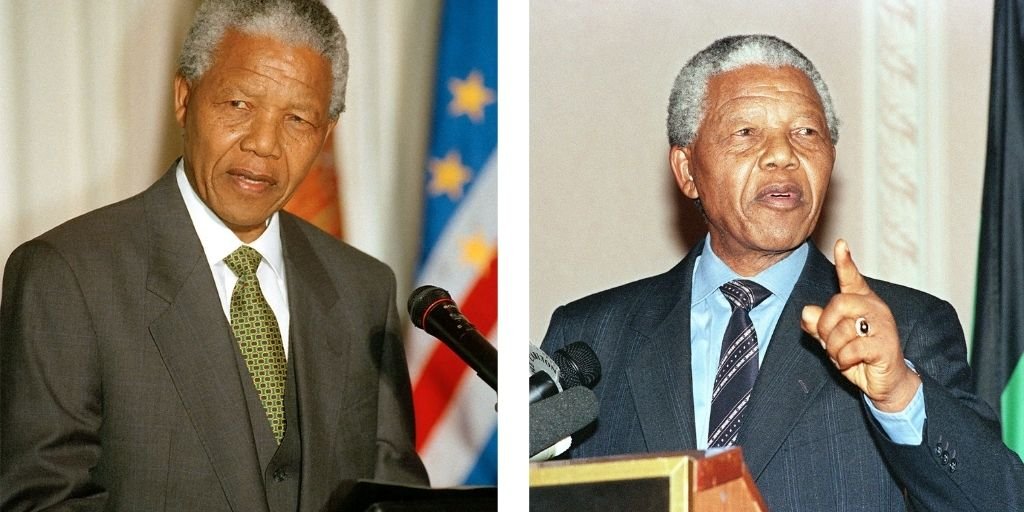
Nelson Mandela remains one of the most recognized figures in modern history. His life was shaped by racial injustice, political struggle, imprisonment, negotiation, democracy, and reconciliation. Born in South Africa in 1918, Mandela became involved in the fight against apartheid, spent more than 27 years in prison, and later became the country’s first democratically elected president in 1994.
But what makes his story so powerful? It is not simply that he became president after years behind bars. His journey shows how a person can move from resistance and confrontation toward negotiation and nation-building while remaining focused on equality and political freedom.
Mandela’s story is like a long bridge between two very different South Africas: one divided by law and race, and another attempting to build democratic institutions for everyone.
Early Life and Family Background
Nelson Rolihlahla Mandela was born on July 18, 1918, in Mvezo, in the Transkei region of South Africa. He came from the Thembu royal family and was raised in a traditional environment where community, leadership, customs, and responsibility were important parts of life.
His childhood was far removed from the international fame that would eventually surround him. As a young man, he studied at institutions including University College of Fort Hare and later the University of Witwatersrand, where he studied law. His education exposed him to ideas about government, justice, rights, and the inequalities experienced by Black South Africans.
Law became particularly important in his early career. Rather than simply discussing injustice, Mandela wanted to understand the legal structures that shaped people’s lives. He eventually became one of South Africa’s first Black lawyers.
A young man shaped by his surroundings
Mandela’s development was influenced by both traditional African society and the increasingly unequal political environment around him. South Africa’s racial divisions were not merely social disagreements. They were supported by laws and government institutions.
As Mandela grew older, the question became increasingly difficult to ignore: How could a country claim to govern its people fairly while denying basic political rights to the majority?
That question would eventually become central to his life.
Mandela and the Fight Against Apartheid
Mandela joined the African National Congress (ANC) in 1944 and became involved in organized opposition to racial discrimination. After the National Party came to power in 1948, apartheid policies became a defining feature of South African government. Mandela and other activists increasingly challenged those policies.
In the early 1950s, he became an important figure in the ANC Youth League. His political activities brought him into conflict with the government, and he became increasingly prominent within the anti-apartheid movement.
From peaceful resistance to armed struggle
Mandela initially participated in campaigns influenced by nonviolent resistance. However, the political environment became more violent and restrictive.
The Sharpeville massacre in 1960, in which police killed 69 demonstrators, became a major turning point in South African politics. The ANC was subsequently banned, and Mandela came to believe that armed resistance had become necessary.
In 1961, he helped establish Umkhonto we Sizwe, commonly translated as “Spear of the Nation,” the armed wing associated with the ANC. Its early campaign focused on sabotage against government infrastructure.
This part of Mandela’s history is important because his political life was not simply a story of peaceful activism from beginning to end. His early resistance included support for armed struggle under the circumstances of apartheid. Understanding that history gives a fuller picture of the man and the movement.
Arrest, Rivonia Trial and Life Imprisonment
Mandela was arrested in 1962 after leaving South Africa and was initially sentenced to five years in prison. During the Rivonia Trial, he and other defendants were accused of sabotage and conspiracy to overthrow the government. In June 1964, Mandela and seven others were sentenced to life imprisonment.
The trial became one of the defining moments of the anti-apartheid struggle.
A speech that became part of history
During the proceedings, Mandela explained the political principles that had shaped his actions. His statement from the dock received international attention. He described his commitment to a democratic society in which people could live with equal rights.
Instead of ending his political influence, imprisonment transformed his public image.
Mandela entered prison as a political prisoner. Over the following decades, he became an international symbol of resistance to apartheid.
27 Years Behind Bars
Mandela spent more than 27 years imprisoned. From 1964 until 1982, he was held at Robben Island, where he endured difficult conditions alongside other political prisoners. He was later transferred to Pollsmoor Prison and eventually Victor Verster Prison.
Life on Robben Island
Prison was not simply a physical restriction. It meant separation from family, limited freedom, hard labor, and years of uncertainty.
Mandela’s mother and eldest son died while he was imprisoned, and he was not permitted to attend their funerals.
Yet prison also became a place where Mandela continued developing his political thinking.
He studied, debated, communicated with fellow prisoners, and maintained contact with the wider political struggle whenever circumstances allowed. His ability to maintain discipline and purpose became a major part of his public image.
Think of a lighthouse standing through a storm. The storm does not make the lighthouse stronger by itself, but surviving it allows its light to remain visible. Mandela’s long imprisonment similarly became inseparable from the meaning attached to his political leadership.
The world began to know his name
During his imprisonment, international campaigns demanded his freedom. The phrase “Free Nelson Mandela” became widely associated with the global anti-apartheid movement.
His imprisonment therefore had an unusual effect: the government could physically restrict Mandela, but it could not prevent his name from becoming internationally recognized.
Release From Prison and the Road to Democracy
On February 11, 1990, Mandela walked out of Victor Verster Prison as a free man. By this point, South Africa was undergoing major political changes. The government had begun dismantling apartheid legislation, and the ANC and other organizations were being brought back into legal political activity.
Mandela did not retire from politics after his release. Instead, he immediately became involved in negotiations concerning South Africa’s future.
Negotiations with former opponents
One of the most significant relationships during this period was between Mandela and President F. W. de Klerk.
They came from opposing political backgrounds and had been on different sides of South Africa’s conflict. Yet they worked toward a negotiated transition to democratic government.
Their efforts were recognized internationally when they jointly received the 1993 Nobel Peace Prize for their work toward the peaceful termination of apartheid and the foundations of a democratic South Africa.
The transition was not simple. Political violence continued, disagreements remained, and many South Africans feared what the future might bring.
Nevertheless, negotiations continued.
Mandela Becomes South Africa’s President
On April 27, 1994, South Africans participated in the country’s first democratic elections in which the broader population could vote. Mandela cast his ballot for the first time in his life.
On May 10, 1994, he was inaugurated as South Africa’s first democratically elected president.
For a man who had spent decades in prison under the previous political system, the moment carried enormous historical significance.
A presidency built around national unity
Mandela’s presidency was not simply about replacing one political group with another. A central challenge was how to govern a country deeply divided by decades of racial discrimination and political conflict.
His government faced questions involving poverty, inequality, education, housing, public services, security, and economic opportunity.
Mandela also emphasized the idea of a South Africa belonging to all its communities.
That approach became closely associated with reconciliation.
Truth, Reconciliation and a Divided Society
One of the most important institutions created during South Africa’s transition was the Truth and Reconciliation Commission (TRC).
The commission was established to help the country confront human rights abuses committed during the apartheid era. It investigated abuses from different sides of the conflict and included committees dealing with human rights violations, reparations and rehabilitation, and amnesty.
Why was reconciliation necessary?
South Africa could not simply erase its past.
Thousands of people had experienced imprisonment, violence, discrimination, forced separation, and other abuses. If those experiences were ignored, the country’s new democracy would inherit unresolved wounds.
The TRC therefore attempted to bring truth into the public record while creating a framework for reconciliation.
Mandela’s broader approach was to encourage South Africans to imagine a shared future rather than allowing the country’s previous divisions to define everything that followed.
This did not mean that every injustice disappeared. South Africa continued to face major social and economic problems after apartheid. Reconciliation was a process, not a magical solution.
Mandela’s Leadership Style and Public Image
Mandela’s leadership attracted enormous international attention. His public image was associated with dignity, patience, reconciliation, and political negotiation, although his complete political history was more complicated.
He was not always a supporter of the same methods throughout his career. His political thinking changed as South Africa’s circumstances changed.
The importance of personal discipline
Mandela was known for his formal manner, careful public communication, and ability to communicate with people from very different backgrounds.
His leadership also involved symbolic gestures.
One famous example came during the 1995 Rugby World Cup, when Mandela appeared wearing a Springbok rugby jersey. The national team had historically been strongly associated with white South Africans, while many Black South Africans had viewed the Springbok symbol negatively because of its connection with the apartheid era.
Mandela used the moment as a public gesture toward national unity.
Whether one looks at this as political symbolism or simply as a memorable sporting moment, it demonstrated an important feature of his presidency: symbols could be used to communicate ideas that speeches alone could not.
Nobel Peace Prize and International Recognition
In 1993, Mandela and F. W. de Klerk were jointly awarded the Nobel Peace Prize. The Nobel Committee cited their work toward ending apartheid peacefully and laying the foundations for a democratic South Africa.
Mandela’s international reputation grew enormously after his release.
He became a prominent speaker on human rights, equality, peace, democracy, and social justice. Governments, universities, organizations, and ordinary people around the world recognized him as an important figure of the twentieth century.
More than an individual story
Mandela himself often emphasized that his achievements were connected to a much larger movement.
The end of apartheid was not created by one person. Activists, political organizations, community leaders, workers, journalists, international campaigners, ordinary citizens, and many others contributed to the long struggle.
This is an important distinction because historical change is rarely the work of one individual alone.
Mandela became the most recognizable face of a much wider movement.
Life After the Presidency
Mandela served as president from 1994 to 1999 and chose not to seek another presidential term.
After leaving office, he remained active in public life.
Children, education and social causes
Mandela supported initiatives involving children, education, health, poverty, and leadership. The Nelson Mandela Children’s Fund was among the organizations connected with his social work.
He also became an important international voice on HIV/AIDS.
In later years, he increasingly reduced his public schedule. His role changed from political officeholder to elder statesman and global humanitarian figure.
The Nelson Mandela Foundation was established in 1999 and later developed projects focused on memory, dialogue, education, and social justice.
Nelson Mandela’s Personal Life and Character
Mandela’s public achievements are often discussed more than his private life, but his personal experiences were an important part of his story.
He married three times. His first marriage was to Evelyn Mase, followed by his marriage to Winnie Madikizela-Mandela. In 1998, on his 80th birthday, he married Graça Machel.
His family life was deeply affected by his political career and imprisonment.
Years away from home meant that his children grew up during a period when their father was largely absent. His political work demanded enormous personal sacrifices.
The human being behind the symbol
It can be tempting to turn famous historical figures into perfect heroes. Mandela’s life was more complicated than that.
He made political decisions that remain subjects of historical debate. He supported armed struggle during part of the anti-apartheid campaign, experienced political disagreements, and faced the same personal challenges that affect other human beings.
Recognizing complexity does not erase his historical importance. Instead, it allows us to understand him as a real person who developed and changed through extraordinary circumstances.
Death, Legacy and Global Influence
Nelson Mandela died on December 5, 2013, in Johannesburg, aged 95.
His death prompted tributes from leaders and communities around the world.
Today, his name remains closely connected with freedom, democracy, equality, reconciliation, and human rights.
Nelson Mandela International Day
The United Nations declared July 18 as Nelson Mandela International Day in 2009. The date corresponds to his birthday and has become an annual occasion for service and community action.
His legacy also lives through the institutions, archives, foundations, books, documentaries, schools, and educational programs associated with his work.
Perhaps the most important lesson of his life is that historical change can take decades. Mandela spent more than a quarter of a century in prison before seeing the political transformation he had worked toward.
His story therefore raises a question that remains relevant: What can one generation do today that may benefit people many years from now?
Conclusion: Why Nelson Mandela’s Story Still Matters
Nelson Mandela’s life was shaped by one of the defining political struggles of the twentieth century. From his childhood in South Africa to his legal career, political activism, imprisonment, release, presidency, and later humanitarian work, his journey crossed extraordinary historical boundaries.
He was both a political activist and a statesman. His history included resistance, armed struggle, negotiation, reconciliation, and democratic government. He also understood that South Africa’s future could not be built simply by reversing the positions of the past.
His greatest historical significance lies not only in becoming president after 27 years in prison, but in participating in a transition from apartheid to democratic rule and in promoting reconciliation during a deeply divided period. The Nobel Committee recognized Mandela and de Klerk for their contribution to the peaceful termination of apartheid and the foundations of a democratic South Africa.
Mandela’s story remains powerful because it connects personal endurance with national transformation. His life reminds us that freedom, justice, and democracy are not single events. They are continuing processes that require participation, responsibility, and the willingness to confront difficult parts of history.
Frequently Asked Questions
1. Who was Nelson Mandela?
Nelson Mandela was a South African political leader and anti-apartheid activist who became the country’s first democratically elected president in 1994. He played a central role in negotiations that helped bring apartheid to an end.
2. How long was Nelson Mandela in prison?
Mandela spent more than 27 years in prison. He was released on February 11, 1990, after being imprisoned since 1962.
3. Why did Nelson Mandela win the Nobel Peace Prize?
Mandela jointly received the 1993 Nobel Peace Prize with F. W. de Klerk for their work toward the peaceful termination of apartheid and the establishment of foundations for a democratic South Africa.
4. When did Nelson Mandela become president of South Africa?
Mandela was inaugurated as South Africa’s first democratically elected president on May 10, 1994, after the country’s first democratic national elections.
5. What is Nelson Mandela remembered for?
Mandela is remembered for his role in the struggle against apartheid, his long imprisonment, his participation in South Africa’s transition to democracy, his presidency, and his emphasis on reconciliation and equality.
