

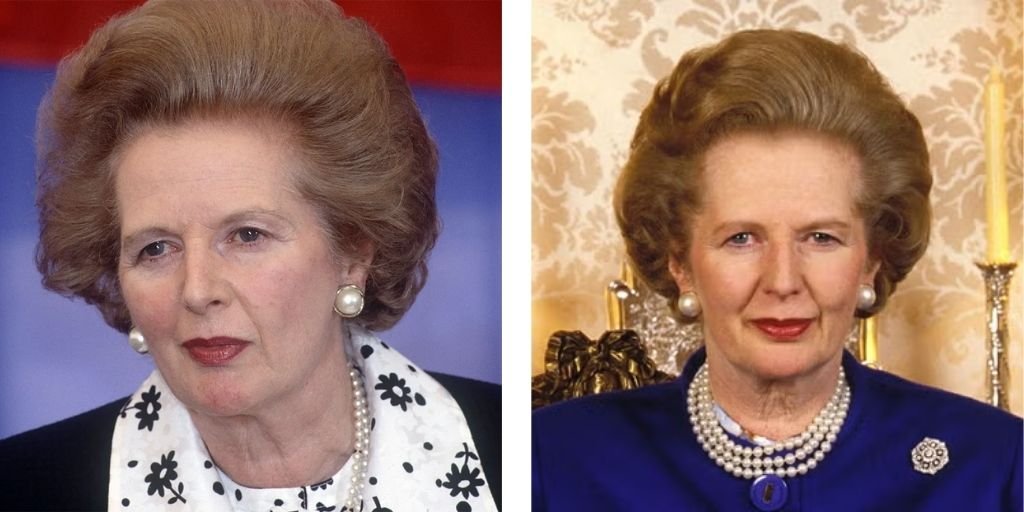
Margaret Thatcher remains one of the most recognizable political figures in modern British history. She became the first woman to serve as Prime Minister of the United Kingdom, holding office from 1979 until 1990. During those years, Britain experienced major economic reforms, political conflicts, military action, changes in public ownership, and debates about the country’s relationship with Europe.
But who was Margaret Thatcher before she entered Downing Street? How did a girl from Grantham rise to the highest political office in Britain? And why does her name still generate strong discussion decades after she left office?
Her story is more than a political biography. It is a story of ambition, discipline, conviction, controversy, and enormous change. Like a stone dropped into a pond, her decisions created ripples that continued through British politics long after her premiership ended.
Margaret Thatcher’s Early Life and Family Background
Margaret Hilda Roberts was born on 13 October 1925 in Grantham, Lincolnshire. Her father, Alfred Roberts, was a shopkeeper and local politician who also served as Mayor of Grantham. Her family background strongly influenced her attitude toward work, responsibility, community life, and personal independence.
Growing up above the family grocery business, Thatcher experienced a relatively modest childhood. Her father was active in local affairs and encouraged his children to take an interest in current events and public life.
Family influence
The Roberts family valued education, hard work, self-reliance, and community involvement. These ideas later became closely associated with Thatcher’s political philosophy.
She attended a local school before winning a place at Somerville College, Oxford, where she studied chemistry from 1943 to 1947. One of her tutors was Dorothy Hodgkin, the Nobel Prize-winning scientist.
Although chemistry was her formal subject, politics increasingly attracted her attention. At Oxford, she became involved with the Conservative movement and eventually served as president of the university’s Conservative Association.
Her scientific education also gave her a disciplined approach to problems. Politics, however, would eventually become the field in which she made her greatest mark.
From Chemistry to Law and Parliament
After university, Thatcher initially worked as a research chemist. However, she did not abandon her political ambitions.
In the 1950s, she trained as a barrister and specialized in taxation. This legal and financial background later became useful when she entered national politics.
Entering Parliament
Thatcher was elected as the Conservative Member of Parliament for Finchley in 1959. She remained associated with the constituency for more than three decades.
Her early parliamentary career involved learning how Westminster worked and developing a reputation within the Conservative Party.
She later became Education Secretary under Prime Minister Edward Heath in 1970. The role was challenging, particularly during a period of intense student protest and political disagreement.
Her experience in government helped prepare her for a much larger challenge: leading her party.
Becoming Conservative Party Leader
The 1970s were a difficult period for Britain. Inflation, strikes, industrial disputes, and economic uncertainty affected public confidence.
After the Conservative Party lost two general elections in 1974, Margaret Thatcher challenged Edward Heath for the party leadership.
In February 1975, she won the leadership contest. This was a historic moment because she became the first woman to lead a major British political party and the first woman to become Leader of the Opposition in the House of Commons.
The “Iron Lady” image
In 1976, a Soviet newspaper gave Thatcher the nickname “Iron Lady” after a speech in which she strongly criticized Soviet policy. The phrase stayed with her and eventually became one of the most famous political nicknames in the world.
Rather than avoiding the label, Thatcher developed a public image built around determination and firmness.
Her leadership style was becoming clear: she wanted to challenge established assumptions rather than simply manage the existing system.
Margaret Thatcher Becomes Prime Minister in 1979
The political environment changed dramatically during the winter of 1978–79, often remembered as the Winter of Discontent because of widespread strikes.
The Conservatives won the general election in May 1979, and Margaret Thatcher became Prime Minister. She was the first woman to hold the office.
A different economic direction
Thatcher’s government wanted to reduce inflation, encourage private enterprise, change taxation, reform trade unions, and reduce the direct role of government in parts of the economy.
The early years were extremely difficult. Inflation was high, interest rates rose, and unemployment increased substantially. The economic adjustment also contributed to the closure of many manufacturing businesses.
This is an important part of understanding her record: the economic transformation associated with Thatcher did not happen without considerable short-term disruption.
Her supporters argued that controlling inflation and changing incentives were necessary for long-term recovery. Critics argued that the social costs were severe, particularly for industrial communities.
Both perspectives are important when examining her historical record.
Economic Reforms and Thatcherism
The term “Thatcherism” came to describe a broad political approach associated with her governments.
It included economic liberalization, privatization, deregulation, changes to taxation, and reforms affecting trade unions. The government also promoted greater individual ownership and responsibility.
Privatization
One of the most significant developments was the sale of state-owned companies.
During the 1980s, major public assets were transferred into private ownership. Shares were often offered to ordinary members of the public, helping expand participation in the stock market.
Trade union reform
Thatcher’s governments also introduced major changes to trade union law. The aim was to limit certain union powers and reduce the possibility of disruptive industrial action.
Supporters saw these reforms as a way to modernize industrial relations. Opponents believed they weakened organized labor and had damaging consequences for workers and traditional industrial communities.
The housing revolution
The Housing Act 1980 introduced the Right to Buy scheme, allowing many council tenants to purchase their homes. The policy became one of the most recognizable domestic reforms of Thatcher’s first government.
For many families, home ownership became more accessible. At the same time, the long-term effects on social housing and housing affordability have remained subjects of debate.
The Falklands War and Margaret Thatcher’s International Role
In April 1982, Argentina invaded the Falkland Islands, a British overseas territory. Thatcher’s government responded by sending a military task force to retake the islands.
The conflict lasted 74 days, and British forces regained control of the islands in June 1982.
A defining moment
The Falklands conflict became one of the defining episodes of Thatcher’s premiership.
Her government had initially pursued diplomatic approaches to the sovereignty dispute. After the invasion, however, the British response became military. Official records show that the government sent the task force after the Argentine invasion and continued diplomatic efforts alongside military preparations.
The conflict had a major effect on British politics. Thatcher’s firm response strengthened her public image as a decisive leader.
The Conservatives subsequently won the 1983 general election with a much larger parliamentary majority.
The Miners’ Strike and Social Conflict
Another major confrontation of the 1980s was the miners’ strike of 1984–85.
The dispute developed around proposed coal mine closures and the future of Britain’s coal industry. The National Union of Mineworkers organized a prolonged strike, while the government maintained a firm position against the union’s strategy.
Why was the dispute so important?
Coal mining was more than an industry. In many communities, it was part of everyday life, local identity, and family tradition.
The conflict therefore represented a much larger argument about Britain’s economic future.
The Thatcher government ultimately survived the confrontation, and the balance of power between government and organized labor changed significantly during the 1980s.
For supporters, the episode demonstrated that elected governments could implement reforms despite powerful unions. For critics, it represented a harsh confrontation with working-class communities.
The dispute remains one of the most emotionally charged parts of Thatcher’s legacy.
Thatcher and the United States
Margaret Thatcher developed a close political relationship with US President Ronald Reagan.
Both leaders supported market-oriented economic policies, strong national defense, and a firm approach toward the Soviet Union. Their relationship became one of the defining political partnerships of the 1980s.
However, Thatcher’s international relationships were not limited to Washington.
She also developed a notable relationship with Soviet leader Mikhail Gorbachev. Thatcher famously engaged with Gorbachev at a time when relations between the Soviet Union and the West were changing.
Her international reputation therefore extended beyond her domestic reforms.
She became an influential voice on issues involving the Cold War, Western alliances, European integration, and the changing global political order.
Margaret Thatcher and Europe
Europe became increasingly important—and increasingly divisive—during Thatcher’s later years.
Thatcher wanted Britain to receive a fair financial arrangement from the European Community. In 1984, negotiations at Fontainebleau produced the famous British budget rebate.
But the larger issue was Britain’s future relationship with European integration.
The Bruges speech
In 1988, Thatcher delivered a major speech in Bruges in which she argued for European cooperation while resisting the idea of excessive political centralization.
Her position increasingly placed her at odds with some colleagues who favored deeper European integration.
By 1990, Europe had become one of the most serious divisions inside her government.
This disagreement would ultimately contribute to the end of her premiership.
Education, Healthcare and the Poll Tax
Thatcher’s third government introduced major reforms in areas such as education, local government taxation, and the National Health Service.
The Education Reform Act 1988 introduced a national curriculum for the first time. Her government also changed the organization of the NHS by separating purchasers and providers and introducing greater competition and management mechanisms.
The Community Charge
One of the most controversial reforms was the Community Charge, commonly called the “poll tax.”
It replaced the previous system of local rates with a charge connected to individual residents.
The policy generated intense opposition and became a serious political problem. It was eventually abandoned by Thatcher’s successor, John Major, in 1991.
This episode demonstrates that Thatcher’s political strength had limits. Even a leader who had won three consecutive elections could face overwhelming resistance to a particular policy.
Why Did Margaret Thatcher Leave Office?
By 1990, disagreements within the Conservative Party had intensified.
The most serious disputes involved European integration, economic policy, and Thatcher’s leadership style.
Foreign Secretary Geoffrey Howe resigned in November 1990, and his resignation helped trigger a leadership challenge from Michael Heseltine. Thatcher initially attempted to remain leader but eventually withdrew from the contest.
On 28 November 1990, Margaret Thatcher resigned as Prime Minister.
John Major succeeded her.
Her departure was unusual because she did not leave office after losing a general election. Instead, internal party divisions led to the end of her premiership.
She had served as Prime Minister for more than eleven years, making her the longest-serving British prime minister of the 20th century.
Life After Downing Street
After leaving office, Thatcher remained active in public life.
She became a life peer in the House of Lords in 1992 and was known thereafter as Baroness Thatcher of Kesteven.
She wrote memoirs, including The Downing Street Years and The Path to Power. She also published Statecraft, a book dealing with international politics.
For many years, she continued speaking publicly and remained a major international political figure.
In 2002, following several small strokes, she announced that she would stop making public speeches.
Margaret Thatcher died in London on 8 April 2013, aged 87. She received a ceremonial funeral with full military honours, including a service at St Paul’s Cathedral.
Margaret Thatcher’s Legacy
How should Margaret Thatcher be remembered?
There is no single answer that everyone accepts.
Her supporters emphasize the economic and political changes associated with her governments. They point to privatization, trade union reform, lower inflation, expanded home ownership, deregulation, and a stronger emphasis on individual responsibility.
Her critics focus on unemployment, deindustrialization, inequality, social divisions, the confrontation with organized labor, and the consequences of some of her economic and social policies.
These competing interpretations are part of why her legacy remains so powerful.
A lasting political influence
Thatcher changed the language of British politics. Even governments that opposed many of her ideas subsequently operated in an environment shaped by the reforms of the 1980s.
Her influence also extended beyond Britain. Her partnership with Reagan, her approach to the Soviet Union, and her views on markets and government became part of a wider international political movement.
At the same time, the continued controversy surrounding her record demonstrates that political change often has winners and losers, and different communities can experience the same historical period in very different ways.
That may be the most useful way to understand Margaret Thatcher: not simply as a hero or villain, but as a political leader whose decisions fundamentally altered Britain’s direction and whose consequences continue to be debated.
Conclusion
Margaret Thatcher’s journey from a shopkeeper’s daughter in Grantham to Britain’s first female Prime Minister is one of the most remarkable political stories of the 20th century. Her time in office brought major changes to Britain’s economy, industry, housing, foreign policy, public services, and relationship with Europe.
She was admired by many for her determination and criticized by many others for the social consequences of her policies. Her three election victories and more than eleven years in Downing Street demonstrate the scale of her political influence.
Whatever one’s view of her policies, Margaret Thatcher left a mark on British history that is difficult to overlook. Her legacy continues to shape discussions about markets, government, individual responsibility, trade unions, national sovereignty, and Britain’s place in the world.
FAQs
1. Who was Margaret Thatcher?
Margaret Thatcher was a British Conservative politician who served as Prime Minister from 1979 to 1990. She was the first woman to become British Prime Minister.
2. Why was Margaret Thatcher called the Iron Lady?
She became known as the “Iron Lady” after a 1976 speech criticizing Soviet policy. The nickname reflected the image of firmness associated with her political style.
3. What was Margaret Thatcher known for?
She was known for economic liberalization, privatization, trade union reforms, the Right to Buy housing policy, her response to the Falklands War, and her strong views on Britain’s relationship with Europe.
4. How long was Margaret Thatcher Prime Minister?
She served as Prime Minister from 1979 until 1990, more than eleven years.
5. When did Margaret Thatcher die?
Margaret Thatcher died on 8 April 2013 in London at the age of 87.
