

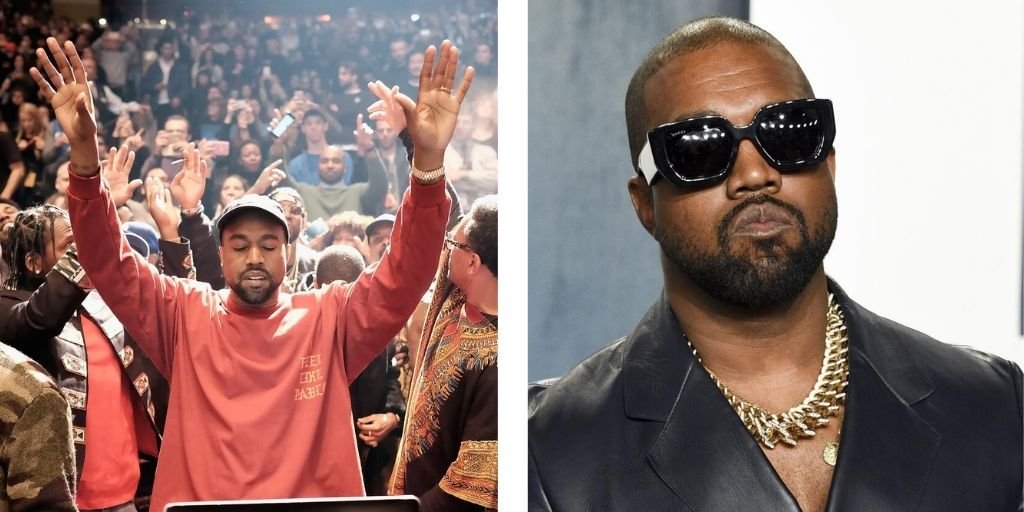
Kanye West is one of the most recognizable and discussed figures in modern music. Born Kanye Omari West on June 8, 1977, in Atlanta, Georgia, he first became widely known as a producer before building a successful career as a rapper, songwriter, and creative director. His breakthrough album, The College Dropout, arrived in 2004 and quickly established him as an artist with a different approach to hip-hop.
Over the years, his career has included major albums, international hits, fashion projects, business ventures, and highly publicized controversies. His story is not simple. It is more like a constantly changing musical journey, with moments of remarkable creativity alongside periods that attracted intense public criticism.
So, what makes Kanye West such an important figure in popular culture? The answer can be found in the way he combined music, fashion, visual art, business, and personal expression.
Early Life and Musical Beginnings
Kanye West grew up with an interest in creativity from an early age. His mother, Donda West, was an educator who played an important role in his upbringing. His father, Ray West, was also involved in different professional and community activities.
Music eventually became the area where West found his strongest creative voice. Instead of immediately trying to become a famous rapper, he initially concentrated heavily on production. He developed a reputation for creating distinctive beats built around samples, soulful melodies, strong drums, and carefully selected vocal elements.
This period was important because it gave him an understanding of music from behind the scenes. He was not simply learning how to perform; he was learning how records were constructed.
His production work helped him gain recognition in the music industry, and collaborations with established artists opened doors for his own recording career.
That transition was not guaranteed to succeed. Producers are often known for helping other performers rather than becoming stars themselves. West, however, wanted to move from the studio into the spotlight.
It was a risk, but it changed the direction of his life.
The College Dropout Changed His Career
In 2004, Kanye West released The College Dropout, his debut studio album. The project became a major breakthrough and reached No. 2 on the Billboard 200. It also introduced listeners to a style that combined personal storytelling, humor, social observations, soulful production, and ambitious songwriting.
The album included songs such as “Jesus Walks,” “Through the Wire,” “All Falls Down,” and “Slow Jamz.”
One of the reasons the album connected with audiences was its honesty. West discussed subjects that did not always fit the traditional image of a successful rapper. Education, money, insecurity, faith, relationships, ambition, and social expectations all appeared in his music.
“Jesus Walks” was particularly notable because it openly addressed faith in a genre where that subject was not always at the center of mainstream hip-hop.
The Recording Academy recognized the album with several awards. West won his first GRAMMYs for work associated with The College Dropout, including Best Rap Album and Best Rap Song for “Jesus Walks.”
The album was more than a debut. It was the foundation on which much of his later career was built.
Late Registration and the Rise of a Superstar
West followed his debut with Late Registration in 2005. The album continued the musical experimentation of his first project while expanding his audience.
The record included “Gold Digger,” featuring Jamie Foxx, which became one of his biggest commercial successes. The song eventually reached No. 1 on the Billboard Hot 100, helping West move even further into mainstream popular culture.
The production on Late Registration was also more elaborate. West worked with orchestral elements and layered arrangements, showing that commercial hip-hop could still be ambitious and musically detailed.
At this stage, his confidence was becoming one of his defining characteristics. He did not seem interested in quietly following existing formulas.
Instead, he frequently experimented with new sounds.
Think of his career like a constantly changing laboratory. Each album became another experiment, with West testing how far he could push rap, pop, electronic sounds, soul, gospel, and alternative influences.
Graduation and a New Direction
In 2007, West released Graduation. The album became another major milestone.
It featured songs including “Stronger,” “Good Life,” and “Flashing Lights.” “Stronger” became particularly recognizable because it blended hip-hop with electronic music and incorporated a prominent sample from Daft Punk.
Graduation also became part of a widely discussed release-week competition with 50 Cent’s Curtis. West’s album sold more copies during its first week and reached No. 1 on the Billboard 200.
The success confirmed that West could compete at the highest commercial level while continuing to change his sound.
However, his personal life soon brought a major emotional challenge.
His mother, Donda West, died in 2007.
Her death had a profound impact on him and influenced the emotional atmosphere of his next project.
808s & Heartbreak Took a Risk
In 2008, West released 808s & Heartbreak, an album that sounded very different from his earlier work.
Instead of relying mainly on traditional rap performances, West used Auto-Tuned vocals, electronic textures, atmospheric production, and emotionally direct songwriting.
The project explored themes of heartbreak, loneliness, loss, and emotional vulnerability.
At the time, some listeners were surprised by the change. Why would an established rapper move away from the formula that had already made him successful?
West appeared willing to take that chance.
The album later became influential in the development of melodic hip-hop and modern rap. The Recording Academy has noted its role in helping open space for artists who combined singing, emotional songwriting, and hip-hop production.
The influence of 808s & Heartbreak can be seen in the work of later artists who made emotionally driven, melodic rap part of mainstream music.
This was one of the clearest examples of West choosing experimentation over comfort.
My Beautiful Dark Twisted Fantasy
In 2010, West released My Beautiful Dark Twisted Fantasy, one of the most ambitious projects of his career.
The album brought together numerous artists and producers and featured songs such as “Power,” “Runaway,” “All of the Lights,” and “Monster.”
Its themes were complex. Fame, relationships, ego, wealth, ambition, insecurity, temptation, and personal conflict all appeared throughout the project.
The album also demonstrated West’s interest in treating an album as a complete artistic experience rather than simply a collection of individual songs.
“Runaway,” in particular, became closely associated with his public image. The accompanying visual project reinforced his interest in combining music with fashion, performance, cinema, and symbolism.
The Recording Academy later recognized the album with a GRAMMY for Best Rap Album.
For many listeners, this period represented the point where West’s creative ambitions extended far beyond conventional hip-hop.
Watch the Throne and Creative Collaborations
West’s career has also been shaped by collaborations.
One of the most famous was Watch the Throne, his 2011 joint album with Jay-Z. The project included major songs such as “Otis,” “N****s in Paris,” and “No Church in the Wild.”
The album received multiple GRAMMY nominations, including Best Rap Album. “N****s in Paris” won awards for Best Rap Performance and Best Rap Song at the 2013 GRAMMY Awards.
Collaboration has always been an important part of West’s creative method.
He has worked with artists from different musical backgrounds, including Rihanna, Kid Cudi, Paul McCartney, Jay-Z, The Weeknd, and many others.
His producer background likely helped him understand how different voices could fit into a larger musical concept.
Yeezus and Artistic Experimentation
In 2013, West released Yeezus, another dramatic change in direction.
The album had a harsher and more experimental sound, incorporating industrial influences, electronic production, distorted vocals, aggressive rhythms, and minimalist arrangements.
Songs such as “Black Skinhead,” “Bound 2,” and “New Slaves” became major talking points.
West’s approach to music during this period showed that he was not particularly interested in remaining inside one genre box.
Some artists build a recognizable formula and repeat it for years. West repeatedly changed his formula.
That approach helped keep public attention on his work, although it also meant that his projects often produced strong disagreement among listeners.
Fashion, Yeezy and Business
Music is only one part of West’s career.
He also became deeply involved in fashion. His work eventually developed into the Yeezy brand, which became associated with footwear, clothing, minimalist design, and large-scale commercial partnerships.
His influence on sneaker culture became particularly significant through collaborations with Adidas.
West approached fashion much like he approached music: he wanted to challenge existing ideas about what something should look like.
The Yeezy aesthetic often emphasized muted colors, unusual shapes, oversized clothing, and minimalist design.
His fashion work also changed how many music fans viewed the relationship between artists and designers.
Instead of treating fashion as simple celebrity merchandise, West positioned it as another part of his creative identity.
This broader approach helped establish the modern idea of the musician as a multi-industry creative brand.
Later Albums and Gospel Influence
West continued changing his musical direction throughout the 2010s and early 2020s.
The Life of Pablo arrived in 2016 and became another highly discussed project. The album included songs such as “Ultralight Beam,” “Famous,” and “Father Stretch My Hands Pt. 1.”
In 2018, he released Ye, a short seven-track album that explored personal thoughts and emotional subjects. The project was released on June 1, 2018.
Later, his music moved more strongly toward religious themes.
In 2019, he released Jesus Is King, a gospel-focused album. The project won the GRAMMY for Best Contemporary Christian Music Album.
He followed it with Donda in 2021, an album named after his late mother.
Donda was nominated for Album of the Year and Best Rap Album at the GRAMMY Awards, while “Jail” and “Hurricane” also received recognition.
These projects demonstrated another important characteristic of his career: his willingness to change themes and musical direction.
Public Controversies and Media Attention
Kanye West’s career cannot be discussed without addressing the controversies that have surrounded him.
Throughout the years, his public statements, interviews, social media activity, business decisions, and interactions with other public figures have generated extensive media coverage.
Some incidents have involved criticism from fans, fellow artists, companies, and members of the public. His statements concerning Jewish people and other groups have also resulted in widespread condemnation and significant professional consequences.
It is important to separate documented events from speculation. Public discussions about West often become highly emotional, and headlines can sometimes reduce complicated situations to a single sentence.
His controversies have affected how many people view his music and public career, while others continue to focus primarily on his artistic work.
This tension is one reason his cultural presence remains so complicated.
He has become an example of how a celebrity’s artistic achievements and public conduct can become deeply connected in the public conversation.
Awards, Achievements and Musical Legacy
West’s awards record demonstrates the scale of his impact on popular music.
According to the Recording Academy, he has 24 GRAMMY wins from 76 nominations. His nominations and wins cover multiple categories, reflecting work as both a performer and producer.
His catalog includes several commercially and critically important projects, from The College Dropout and Late Registration to Graduation, 808s & Heartbreak, My Beautiful Dark Twisted Fantasy, Yeezus, The Life of Pablo, Ye, Jesus Is King, and Donda.
Perhaps his greatest musical contribution is not one particular song.
It is his willingness to experiment.
He helped make it more acceptable for mainstream rappers to discuss insecurity, faith, heartbreak, ambition, fashion, and vulnerability. His production style also helped bring soul samples, electronic sounds, orchestration, gospel influences, and unconventional arrangements into mainstream hip-hop.
His influence can be compared to a bridge. He connected different musical worlds that might previously have seemed separate.
Kanye West’s Lasting Cultural Impact
Kanye West’s influence extends well beyond record sales and awards.
He helped reshape expectations for what a hip-hop artist could become.
A rapper could also be a producer, fashion designer, entrepreneur, visual artist, creative director, and cultural commentator.
That idea has become increasingly common in modern entertainment.
His career also demonstrates the power and danger of constant public visibility. Social media has made it possible for celebrities to communicate directly with millions of people, but that same access can make every statement instantly public.
West’s story therefore contains several different lessons.
Creatively, he demonstrated the value of experimentation.
Commercially, he showed how music could become part of a larger brand.
Culturally, he demonstrated how influential artists can shape conversations far beyond their original field.
At the same time, his controversies show that public actions and statements can have serious consequences for professional relationships and public reputation.
Whether people admire his music, criticize his public behavior, or simply find his career fascinating, his place in modern popular culture is difficult to ignore.
Conclusion
Kanye West’s career is one of the most complicated stories in modern entertainment. He began as a producer, became a successful rapper, expanded into fashion and business, and repeatedly changed his musical style. His albums introduced new sounds and personal themes while his collaborations connected him with some of the biggest names in music.
His achievements are substantial, including 24 GRAMMY wins and 76 nominations according to the Recording Academy. Yet his public controversies have also become an important part of the story.
Ultimately, his career shows how creativity, ambition, fame, business, and public responsibility can collide. His music remains influential, while his public life continues to generate discussion.
For better or worse, Kanye West has never been an easy artist to place inside one box—and perhaps that is one of the clearest explanations for his lasting cultural presence.
Frequently Asked Questions
1. Who is Kanye West?
Kanye West is an American rapper, songwriter, producer, fashion entrepreneur, and creative figure. He became widely known through production work before launching his solo career with The College Dropout in 2004.
2. What was Kanye West’s first major album?
His first major studio album was The College Dropout, released in 2004. The album reached No. 2 on the Billboard 200 and earned him several early GRAMMY awards.
3. How many GRAMMY Awards has Kanye West won?
The Recording Academy currently lists Kanye West with 24 GRAMMY wins and 76 nominations.
4. What is Kanye West known for besides music?
He is also known for fashion and the Yeezy brand, as well as his work as a producer, entrepreneur, and creative director.
5. Why is Kanye West so influential in hip-hop?
His influence comes from his production style, willingness to experiment with different genres, emotionally personal songwriting, collaborations, and ability to connect music with fashion and visual culture.
